|
|
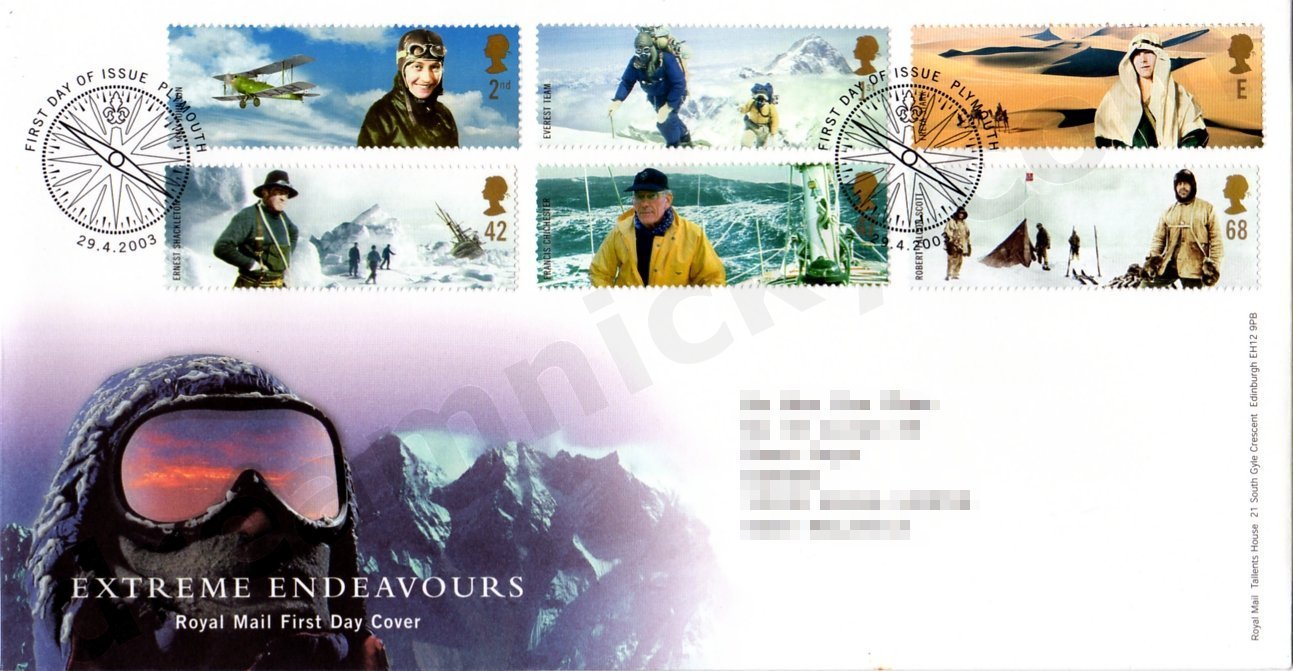
Extreme Endeavours
Robert Falcon Scott
(1868-1912)
Royal Navy commander who lost the race to be first to the South Pole yet became a national hero. 'Scott of the Antarctic' reached the South Pole on 17 January 1912, a month after Norwegian Roald Amundsen. The return journey turned into a nightmare. All five of the team perished, ground down by cold, hunger and raging blizzards.
Sir Ernest Shackleton
(1874-1922)
Polar explorer who led the British Antarctic Expedition in 1907, sledging to 156 kilometres of the South Pole. Best remembered for his 1914 attempt to cross Antarctica when his ship Endurance was crushed in pack ice, but he rescued the crew without the loss of a single life after sailing 1290 kilometres in an open boat across stormy seas to South Georgia.
Dame Freya Stark
(1893-1993)
Traveller and author who made journeys, often alone, into remote areas of Iraq, Iran and southern Arabia. A nurse on the Italian front during World War I, Stark climbed in the Alps and was only the second woman to the top of Monta Rosa. She assisted British intelligence in World War II and continued adventuring into old age – she sailed down the Euphrates river in 1976, aged 83.
Sir Francis Chichester
(1901-72)
Airman and yachtsman whose courageous solo voyages late in life won public acclaim and affection. Achieved a hazardous solo flight from England to Australia in 19 days in 1929. He won the first single-handed transatlantic yacht race in 1960, and finished second in 1962. Chichester achieved fame aged 65 by sailing solo around the world, with just one stop at Sydney.
Amy Johnson
(1903-41)
Record-breaking aviator. A fish merchant's daughter from Hull who, with only 50 hours of flying experience, made the first woman's solo flight from England to Australia, taking 17 days. Further record-breaking flights across Siberia, the Atlantic and solo to Cape Town. Johnson disappeared over the Thames estuary ferrying an aeroplane in World War II.
Sir Edmund Hillary
(born 1919) and
Tenzing Norgay
(1914-86)
Hillary and Tenzing made history on 29 May 1953 when they became the first to reach the summit of Mount Everest. They were part of the British expedition led by John Hunt. Hillary went on to explore Antarctica and the Himalayas and served as New Zealand High Commissioner to India, Nepal and Bangladesh. Tenzing Norgay became the Director of Field Training at the Himalayan Mountaineering Institute at Darjeeling.
|
Technical Details
Number of stamps: six
Date of issue: 29 April 2003
Design: Howard Brown
Acknowledgements: Amy Johnson © Getty Images, aeroplane courtesy Austin J Brown; Sir Edmund Hillary, Tenzing Norgay, Sir Ernest Shackleton and Robert Falcon Scott © Royal Geographical Society; Dame Freya Stark courtesy John Murray, background images © Getty Images and Still Pictures; Sir Francis Chichester courtesy Chichester Archive/PPL
Printer: De La Rue Security Print, High Wycombe HP13 5EZ
Process: gravure
Stamp designs © Royal Mail Group plc 2003
Format: horizontal
Size: 60mm × 21mm
Perforations: 15 × 14.5
Number per sheet: 50
Phosphor bars as appropriate
Gum: PVA
Cover design: Silk Pearce
Acknowledgements: Filler card image courtesy Royal Geographical Society, Cover mountain image © John Cleare
Words: Stephen Goodwin
Cover design © Royal Mail Group plc 2003
All rights reserved
Search this site for first day covers:
|


 United Kingdom
 Back to Page 6
 Jump
Jump